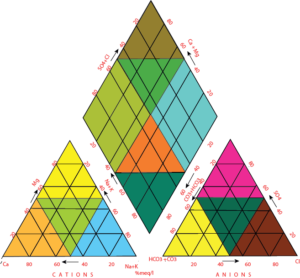
The chemical composition of groundwater is a critical factor influencing its suitability for various uses, including drinking, irrigation, and industrial purposes. Trace elements and major ions play distinct roles in determining groundwater quality. Here’s a breakdown of the roles of the specified parameters:
Trace Elements:
Iron (Fe total):
Aesthetic Issues: High concentrations can cause reddish-brown staining of water, laundry, and plumbing fixtures. It can also impart a metallic taste to water.
Industrial Problems: Iron can precipitate and cause scaling or blockages in pipes and industrial equipment.
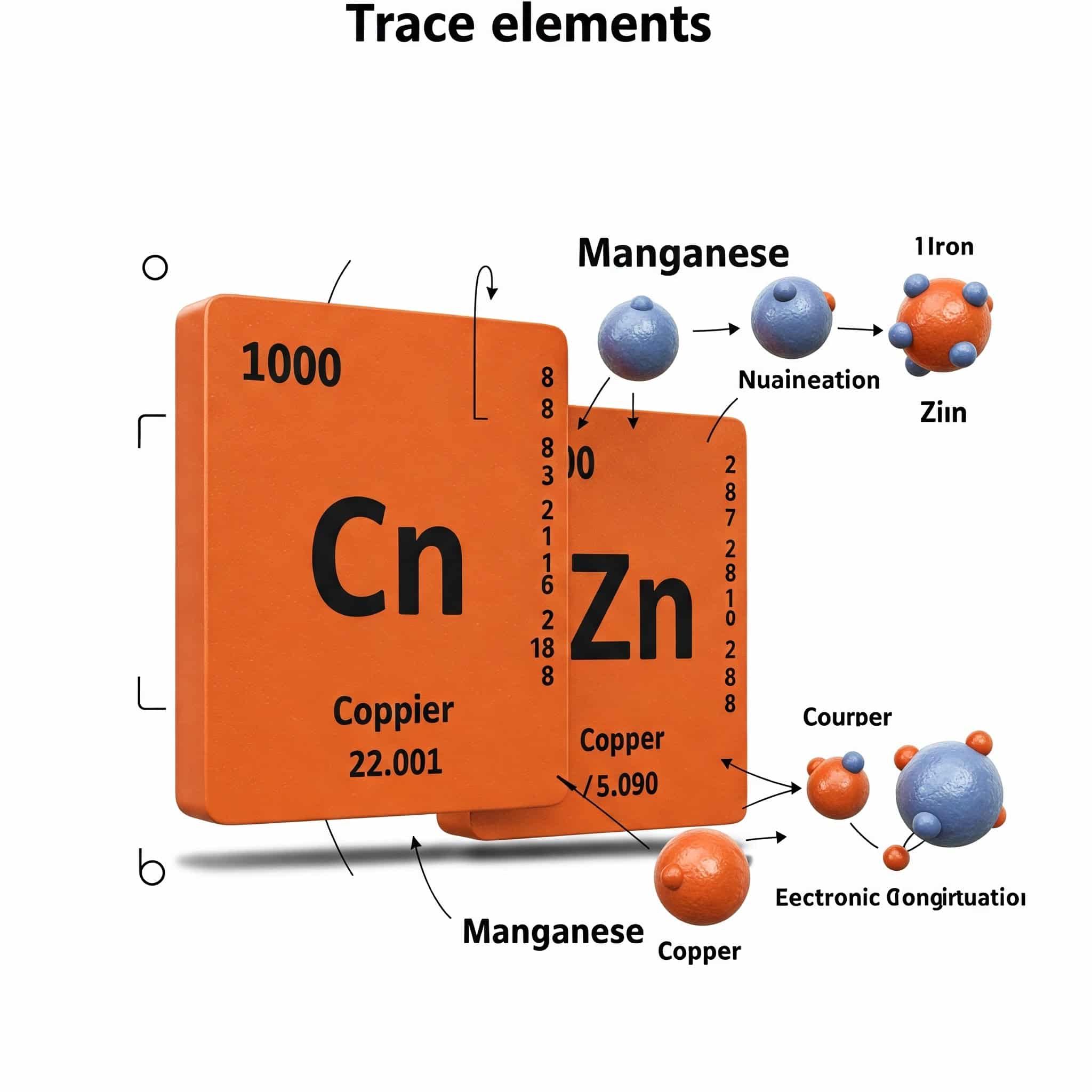
Health Concerns: While iron is an essential nutrient, excessive intake can lead to hemochromatosis, a condition where the body absorbs too much iron.
Geochemical Indicator: Iron concentration is influenced by the redox potential (Eh) and pH of the groundwater. Reducing conditions and lower pH tend to increase iron solubility.
Boron (B):
Agricultural Impacts: Boron is an essential micronutrient for plant growth, but high concentrations can be toxic to certain crops, especially sensitive ones. The acceptable limits for irrigation water vary depending on the crop type and soil conditions.
Health Concerns: High levels of boron in drinking water can have adverse health effects, particularly on the reproductive system.
Geochemical Indicator: Boron sources in groundwater can include weathering of boron-containing minerals in rocks and sediments, geothermal activity, and anthropogenic inputs like fertilizers and industrial waste.
Major Physicochemical Parameters:
pH:
Water Quality Indicator: pH is a measure of the acidity or alkalinity of water. The typical range for groundwater is 6.0 to 8.5.
Solubility and Mobility of Contaminants: pH significantly affects the solubility and mobility of many substances in groundwater, including heavy metals and nutrients. For example, lower pH can increase the solubility of some toxic metals.
Biological Activity: pH influences the types of microbial activity that can occur in groundwater.
Corrosion: Low pH water can be corrosive to pipes and plumbing systems, leading to the leaching of metals like lead and copper into the water. High pH can cause scaling.
Electrical Conductivity (EC):
Salinity Indicator: EC measures the ability of water to conduct electricity, which is directly related to the concentration of dissolved ions (salts and minerals). Higher EC indicates higher salinity or total dissolved solids.
Suitability for Irrigation: High EC water can be harmful to plants by increasing the osmotic pressure of the soil solution, making it difficult for roots to absorb water.
Water Quality Assessment: EC is a useful indicator of overall water quality and can signal the presence of contamination.
Total Dissolved Solids (TDS):
Water Quality Indicator: TDS represents the total amount of dissolved inorganic and organic substances in water. It includes salts, minerals, metals, and other ions.
Taste and Aesthetics: High TDS can affect the taste, odor, and appearance of water, making it unpalatable.
Suitability for Use: High TDS water can be unsuitable for drinking, irrigation, and some industrial processes.
Sodium Adsorption Ratio (SAR):
Irrigation Water Quality: SAR is a measure of the relative proportion of sodium (Na+) to calcium (Ca2+) and magnesium (Mg2+) ions in water. It indicates the potential for sodium to accumulate in the soil, which can reduce soil permeability and structure, hindering water infiltration and plant growth. High SAR water requires careful soil management practices.
Residual Sodium Bicarbonate (RSBC):
Irrigation Water Quality: RSBC assesses the excess of bicarbonate (HCO3-) and carbonate (CO32-) over calcium and magnesium. High RSBC can lead to the precipitation of calcium and magnesium carbonates in the soil, increasing the relative proportion of sodium and exacerbating sodium hazards (high SAR).
Sodium Percentage (SSP):
Irrigation Water Quality: SSP is another way to express the relative abundance of sodium compared to other major cations. A high sodium percentage can indicate a potential sodium hazard for irrigation.
Total Hardness (TH):
Water Quality Indicator: TH is primarily caused by the presence of calcium (Ca2+) and magnesium (Mg2+) ions. It is expressed as the equivalent concentration of calcium carbonate (CaCO3).
Aesthetic Issues: Hard water can cause scaling in pipes, water heaters, and appliances, reduce the lathering of soap, and leave a film on surfaces.
Industrial Problems: Hardness can interfere with various industrial processes.
Permeability Index (PI):
Irrigation Water Quality: PI is used to assess the suitability of water for irrigation based on its effects on soil permeability. It considers the concentrations of calcium, magnesium, sodium, and bicarbonate.
Major Cations:
Calcium (Ca):
Water Hardness: A major contributor to water hardness.
Soil Structure: Calcium plays a vital role in maintaining good soil structure by promoting aggregation of soil particles.
Plant Nutrient: Calcium is an essential nutrient for plant growth.
Magnesium (Mg):
Water Hardness: Another major contributor to water hardness.
Plant Nutrient: Magnesium is also an essential nutrient for plants, particularly for chlorophyll production.
Sodium (Na):
Salinity and SAR: High sodium concentrations contribute to salinity and increase the SAR, posing risks to irrigation water quality and soil health.
Health Concerns: High sodium intake can be a concern for individuals with certain health conditions.
Potassium (K):
Plant Nutrient: Potassium is an essential macronutrient for plant growth.
Geochemical Indicator: Potassium concentrations can provide information about the weathering of certain minerals.
Major Anions:
Bicarbonate (HCO3):
Alkalinity: Bicarbonate is a major component of alkalinity in water, which is the capacity of water to neutralize acids.
pH Buffering: It helps to buffer changes in pH.
Irrigation Issues (RSBC): High bicarbonate can lead to calcium and magnesium carbonate precipitation in soil.
Chloride (Cl):
Salinity: Chloride is a major contributor to the salinity of water.
Taste: High chloride concentrations can impart a salty taste to water.
Corrosion: Chloride can increase the corrosivity of water to metals.
Indicator of Contamination: Elevated chloride levels can indicate contamination from seawater intrusion, industrial waste, or sewage.
Sulfate (SO4):
Taste and Odor: High sulfate concentrations can cause a bitter taste and, under reducing conditions, can be reduced to hydrogen sulfide (H2S), producing a rotten egg odor.
Laxative Effects: High sulfate levels in drinking water can have laxative effects.
Industrial Problems: Sulfate can contribute to scaling in industrial processes.
Phosphate (PO4):
Nutrient: Phosphate is an essential nutrient for plants and microorganisms
Eutrophication: Elevated phosphate levels, often due to anthropogenic pollution (e.g., fertilizers, sewage), can lead to eutrophication of surface waters if groundwater discharges into them, causing excessive algal growth and oxygen depletion. In groundwater itself, high phosphate levels can indicate contamination