
Bangladesh is one of the younger countries than countries in the Indian subcontinents.
The Reason Why dinosaur Didnt Live in Bangladesh
The oldest sediments of Bangladesh are Pleistocene 18 hundred thousand years.
Whereas India has much older sediments there and is more than 25 million years old. The age of the rocks of the country is a major factor in finding the answer to this question. Because the age of dinosaurs is 6.6 million years. The dinosaur lived 6.6 million years ago in India.
Dinosaurs were wiped out by the asteroid impact 6.6 million years ago from the Indian continent.
After that, there was no dinosaur in this world. Bangladesh is formed by the river-transported sediments piling up. All the alluvial sediments were transported by the Ganges river system to the Bay of Bengal and formed the deltaic country named Bangladesh.
This forming process is relatively young. Because of the Himalayan mountains the Ganges River system was initiated. To know the details history of the delta formation we have to know the formation of the Himalayas. The Himalayan mountains were not there before 6.6 million.
Why did Dinosaur go Extinct and get the answer of Why dinosaur didnt live in Bangladesh ?
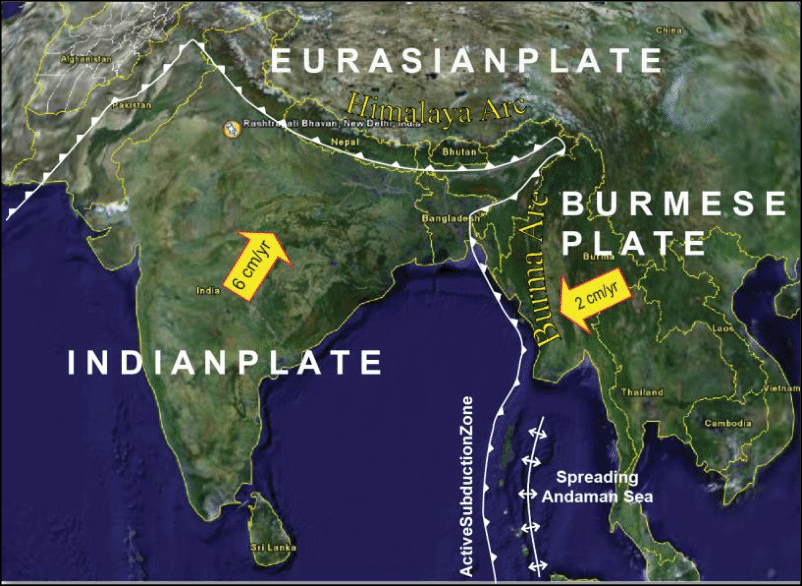
The Indian continent detached from the Australian continent at 6.6 million years ago. And colliding with the Eurasian plate forming the Himalayan mountains. Before the formation of the Himalayas, this place was a sea, called Tethys sea. This sea disappeared and formed the Himalayan mountains. Much later this delta formation process initiated which is now Bangladesh.
From the above tectonic history, we know that Bangladesh has no history of occupying land suitable for the dinosaurs.
Hence, Bangladesh has no dinosaur fossils ever. Before the formation of Bangladesh, all the dinosaurs were already extinct from this world.
Moreover, while dinosaurs did roam the Earth millions of years ago, they were not present in Bangladesh specifically, or anywhere in South Asia for that matter. Here’s why:
Timeframe Mismatch:
- Dinosaurs existed between roughly 243 million and 66 million years ago, during the Mesozoic Era (Triassic, Jurassic, and Cretaceous periods).
- Bangladesh, along with the Indian subcontinent, was part of the supercontinent Gondwana during this time. This landmass was located near the South Pole, experiencing a cold and harsh climate unsuitable for the majority of dinosaurs who thrived in warmer regions closer to the equator.
Continental Drift:
- Around 180 million years ago, Gondwana began to break apart, and the Indian subcontinent gradually drifted northward.
- This movement continued throughout the dinosaur era, keeping the region far from the ideal habitat and evolutionary path of dinosaurs.
Fossil Evidence:
- While dinosaur fossils have been found in India and Pakistan, none have been discovered in Bangladesh. This further supports the idea that dinosaurs were not present in the region.
Alternative Life Forms:
- Although dinosaurs were absent, the Mesozoic Era in South Asia was not devoid of life. Fossils of marine reptiles, amphibians, and early mammals have been found, suggesting a diverse ecosystem adapted to the region’s specific conditions.
In Bangladesh, there were such ages of rock so far we find which might the evidence of the dinosaurs. The Geological Society of Bangladesh did not find any evidence. We hope in the future there might be rocks or fossils in the northern part of Bangladesh to get dinosaur fossils. Because, neighboring district of Bangladesh in Meghalaya there is a lot of evidence of dinosaurs. We are optimistic. maybe a closer district may have any dinosaur fossils?
Let’s find out shortly.
Why dinosaur didnt live in Bangladesh, this is a recent question because Bangladesh was an impoverished country hence this country was focused on poverty only. Now the country is developing so we can get the real answer “Why dinosaur didnt live in Bangladesh”.
Did dinosaurs live in Bangladesh?
and
Why haven’t dinosaur fossils been found in Bangladesh?
The Geological Explanation
Did Dinosaurs Ever Live in Bangladesh? Imagine standing on the banks of the Padma River and wondering: Did giant dinosaurs once walk across the land that is now Bangladesh?
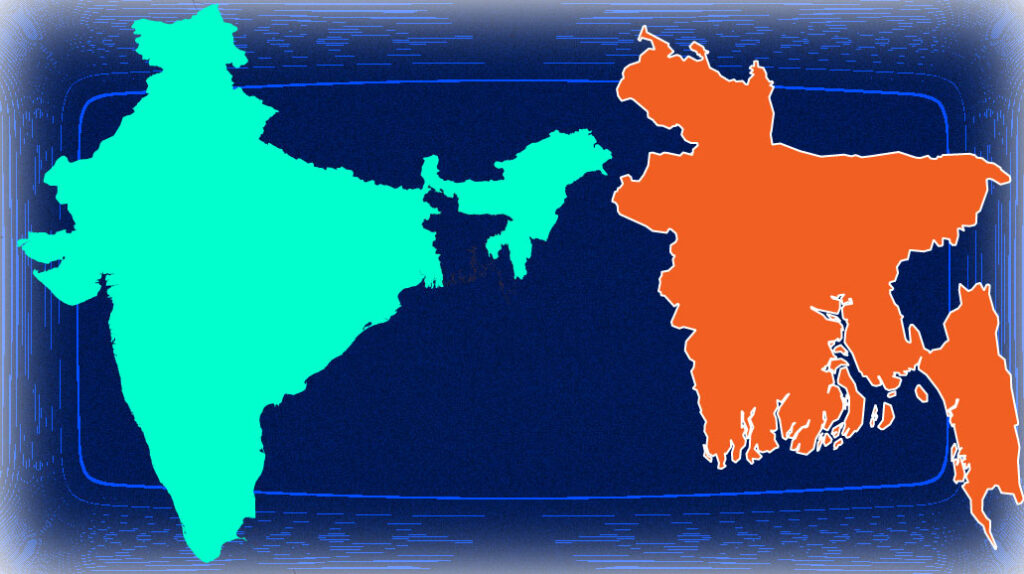
It is a fascinating question. Dinosaurs roamed the Earth for more than 160 million years, dominating forests, deserts, and river valleys across nearly every continent. Fossils have been discovered in neighboring India, China, Mongolia, and even Antarctica. Yet, despite decades of geological exploration, no confirmed dinosaur fossil has ever been discovered in Bangladesh.
Does this mean dinosaurs never lived here?
Not necessarily.
The answer lies in Bangladesh’s unique geological history, the formation of the Bengal Delta, and millions of years of sediment deposition that have hidden—or perhaps erased—the evidence.
The Short Answer
There is currently no scientifically confirmed dinosaur fossil discovered in Bangladesh. However, this does not prove that dinosaurs never existed in the region that later became present-day Bangladesh. Instead, scientists believe that Bangladesh’s geological conditions make discovering dinosaur fossils extremely difficult.
What Did Bangladesh Look Like During the Dinosaur Age?
To understand why dinosaur fossils are absent, we must travel back approximately 100–150 million years. During the Jurassic and Cretaceous periods, Bangladesh did not resemble today’s fertile delta. Instead:
-Much of the region was covered by shallow tropical seas.
– Large river systems had not yet formed.
– Thick marine sediments accumulated over millions of years.
– The Bengal Basin was still developing.
Unlike today’s Bangladesh, which is dominated by rivers and floodplains, ancient Bangladesh was largely a marine and coastal environment.
Bangladesh Was Not the Bangladesh We Know Today
Modern Bangladesh is one of the youngest landscapes on Earth. Most of its surface has formed only during the last few million years through sediment carried by:
– The Ganges
– The Brahmaputra
– The Meghna
These rivers have deposited enormous quantities of sand, silt, and clay, burying older rocks beneath several kilometers of sediment. Because dinosaur fossils are usually found in exposed sedimentary rocks from the Mesozoic Era, Bangladesh offers very few accessible rock formations of that age.
Why India Has Dinosaur Fossils but Bangladesh Doesn’t
One of the most interesting questions is: Why are dinosaur fossils common in India but absent in Bangladesh?
The answer lies in geology.
India contains:
– Ancient exposed sedimentary rocks
– Dinosaur nesting grounds
– Fossil-bearing formations
– Stable rock layers dating back over 150 million years. Famous dinosaurs discovered in India include:
– Rajasaurus
– Isisaurus
– Barapasaurus
– Jainosaurus
These fossils have been found in states such as Gujarat, Madhya Pradesh, and Maharashtra. Bangladesh
Bangladesh, on the other hand, consists mostly of:
– Young river sediments
– Thick alluvial deposits
– Active erosion
– Frequent flooding
– Deeply buried ancient rocks.
These conditions are unfavorable for preserving and exposing dinosaur fossils.
The Role of Plate Tectonics Around 180 million years ago, India was part of the southern supercontinent Gondwana. The Indian Plate gradually separated and drifted northward. Eventually, it collided with the Eurasian Plate approximately 50 million years ago, creating the Himalayas. This collision also influenced the formation of the Bengal Basin, where Bangladesh is located today. Because the region experienced continuous sediment accumulation, older dinosaur-bearing rocks became deeply buried beneath younger deposits.
The Bengal Basin:
A Natural Archive Bangladesh lies within one of the world’s largest sedimentary basins—the **Bengal Basin**. Over millions of years:
– Rivers transported sediments from the Himalayas.
– These sediments accumulated layer upon layer.
– Older geological formations disappeared beneath thick deposits. In some places, the sediment thickness exceeds **10 kilometers**. This means that if dinosaur-age rocks exist beneath Bangladesh, they are likely buried far below the surface.
Could Dinosaurs Have Lived Here?
Scientists cannot completely rule out the possibility. If parts of present-day Bangladesh were above sea level during certain periods of the Late Cretaceous, dinosaurs may have passed through or inhabited those landscapes. However, no fossil evidence has yet been discovered to support this hypothesis.
In science, conclusions are based on evidence—not assumptions.
Why Fossils Are Rare in Bangladesh.
Several geological factors make fossil discovery difficult.
1. Young Surface Geology.
Most exposed rocks are too young to contain dinosaur fossils.
2. Thick River Sediments
Ancient rocks remain buried beneath thousands of meters of alluvium.
3. Tropical Climate
Heavy rainfall and chemical weathering destroy exposed fossils over time.
4. River Erosion
Large rivers constantly reshape the landscape, removing or burying potential fossil sites.
5. Limited Exploration
Only a small portion of Bangladesh has been explored for vertebrate fossils.
What Fossils Have Been Found in Bangladesh?
Although dinosaur fossils are absent, Bangladesh has yielded several important fossils, including:
– Marine shells
– Mollusks
– Corals
– Plant fossils
– Fossil wood
– Elephant remains
– Rhinoceros fossils
– Crocodile remains
These discoveries help scientists reconstruct the country’s ancient environments.
Could Dinosaur Fossils Still Be Found?
Yes.
Future discoveries are possible. Scientists continue exploring:
– Offshore geological structures
– Borehole samples
– Previously unexplored formations.
Advances in drilling technology, geophysical surveys, and remote sensing may reveal older rocks hidden beneath younger sediments. If dinosaur-age formations are eventually reached, new fossil discoveries could change our understanding of Bangladesh’s prehistoric past.
Ancient Bangladesh Was Full of Marine Life. Although dinosaurs may not have left fossils here, ancient Bangladesh supported abundant marine ecosystems. Scientists believe these environments contained:
– Fish
– Sharks
– Marine reptiles
– Ammonites
– Corals
– Shellfish
These organisms were better suited to the shallow tropical seas covering much of the region.
Geological Timeline of Bangladesh
250 million years ago
Gondwana supercontinent
↓
180 million years ago
Indian Plate begins drifting north
↓
100 million years ago
Shallow seas cover much of present-day Bangladesh
↓
66 million years ago
Dinosaurs become extinct
↓
50 million years ago
Indian Plate collides with Eurasia
↓
2 million years ago to present
Formation of the Bengal Delta
Scientific Misconceptions
Many websites claim: Dinosaurs never lived in Bangladesh. This statement is not scientifically accurate. The correct statement is: No confirmed dinosaur fossils have been discovered in Bangladesh so far.
There is an important difference. Absence of evidence is not evidence of absence. Future discoveries may change our understanding.
Frequently Asked Questions
Have dinosaur fossils been found in Bangladesh?
No.
There are currently no scientifically confirmed dinosaur fossils discovered in Bangladesh.
Why has India found dinosaur fossils but Bangladesh has not?
India contains exposed Mesozoic rock formations, whereas Bangladesh is covered by young river sediments that bury older rocks.
Was Bangladesh underwater during the dinosaur age?
Much of the region was covered by shallow marine environments or coastal systems during large parts of the Mesozoic Era.
Could dinosaurs have lived in present-day Bangladesh?
It is possible, but there is no fossil evidence to confirm it.
Could future discoveries change this?
Yes. New geological exploration and drilling may uncover older rock formations capable of preserving dinosaur fossils.
Conclusion.
The mystery of dinosaurs in Bangladesh is not simply about missing fossils—it is a story of geology, plate tectonics, ancient oceans, and one of the world’s largest river deltas. Bangladesh’s landscape has been shaped by millions of years of sediment deposition, which has hidden much of its ancient geological history beneath thick layers of alluvium. While no confirmed dinosaur fossils have been found so far, scientists continue to explore the country’s subsurface geology. Future discoveries may yet reveal surprising chapters of Bangladesh’s prehistoric past. Until then, the most scientifically accurate conclusion is clear:
Bangladesh has no confirmed dinosaur fossils—not because dinosaurs certainly never lived here, but because the geological record has yet to reveal the evidence.


Its really intresting to know about dinos
Thanks for letting us know.
you are well come.